
Zombie Companies or how to react in the face of points of no return

Two days after Halloween, the French-Canadian media outlet "La Presse" published the headline: "This is an invasion of the living dead." They were not referring to the zombies from Michael Jackson's "Thriller," but rather to the phenomenon of zombie companies that are infiltrating our economy. The concept of zombie companies originated in Japan in 2007 and remains relevant today. This term refers to companies that have been in operation for at least ten years but have income insufficient to cover their interest charges for three consecutive years. This anti-zombie perspective is very much aligned with Schumpeter's ideas and has a Darwinian essence, contrasting sharply with the views held by many Keynesians.
In short, the manna from the goddess ECB combined with the cash tap of the PGE (State-Guaranteed Loans) should considerably increase the share of zombies in the economy. We also learned in the medias that each life saved from the French pandemic in 2020 cost roughly 6 million euros. This is highly morbid and economical.
This definitely sends chills down my spine. These parasitic companies are held accountable—but not guilty, as politicians would say—for a decade of lost growth in Japan. Will we be back on the path to growth ten years from now? Only time will tell. In any case, people are voicing their concerns about this pollution of the economic ecosystem, which distorts competition, drains the lifeblood out of growth, and ultimately affects the markets.
Tech start-ups can often find themselves heavily in debt and operating at a loss for extended periods. In contrast, "zombie companies" are viewed as being in a state of inevitable decline. These firms are thought to have reached a point of no return and are kept artificially afloat by state or bank support, when, in reality, they should be allowed to fail according to market forces.
Should we put an end to economic stubbornness? Should we show more authority and condemn those who artificially keep companies afloat? The well-meaning economists who suggest this often lack awareness of the consequences of their proposals. I would like to offer them an alternative perspective… a more emotional perspective.
Let’s explore the dilemma of a leader at a point of no return. To illustrate this, I need to tell you about the death of Vicky, who could have become a zombie in my mind. To me, Vicky is still alive. She made me realize that I was just a child when I thought I was a grown-up. Vicky was my grandfather's pointer dog.
One evening, seeing her sick and disoriented, we took her to the vet. As she was leaving for the appointment, she gave me a gaze that will be engraved in my mind forever. When my dad returned alone, I realized things had not turned out as he had hoped. Looking at me with tear-filled eyes, he simply said, “The vet gave her an injection.”
I kept reminding myself, “Ludo, Vicky wasn’t a human being!” True, but she was more than just anyone. I thought about this as I soaked my pillow with tears. I loved Vicky like any other friend. Her warm welcome felt like that of a prodigal son returning home, especially when it seemed like the whole world was against you. She stood by your side when you felt alone and listened without judgment or interruption. With her, you felt completely safe while also being entirely free.
She had a unique mindset when it came to racing greyhounds. Her profound loss taught me how life continues and can be re-enchanted even in tough times. Vicky had reached a point of no return; her pain was worsening, and according to the vet, “there was no hope of relieving her suffering.” We decided not to let her exist as a shell of her former self. “Yeah, sure!”
How can the loss of a beloved dog, whose suffering led to the difficult decision to end its life, be related to the business world? To me, it reflects a new awareness. Painful circumstances can prompt a manager to take decisive actions to prevent their company from stagnating and ultimately failing. A company is almost like a living being, and its vitality directly impacts the well-being of the employees connected to it. If a company remains in a precarious state for too long, it risks becoming a "zombie," forcing shareholders to support it even after it has reached a point of no return.
When reaching the point of no return, a manager basically has three choices:
1. Dismiss it: With blind optimism, the manager might deny the issue altogether. Believing that their company is invincible, they will look for additional resources to help them endure the situation, holding on to the hope that better days are ahead. In this case, they will sit and wait for the challenges to pass.
2. Go along with it: Much like my grandfather when facing the decline of his dog, the manager may choose to accelerate the demise of the company and reinvest elsewhere. Understanding that the path they were on has become a dead end, they will clean up their operations and hand over the keys, perhaps even taking a moment for reflection before leaving.
3. Explore it: Taking inspiration from Christopher Columbus, the manager will utilize both imagination and clarity. While refusing to believe that all is lost, they will acknowledge the need for change. They will promote cost-saving measures and concentrate on one or two vital priorities to navigate toward a new "promised land." Despite the challenges, they still have faith in their company's future.
The latter is clearly the most inspiring perspective for a manager to hold. A company is not meant to die like humans or animals do; many companies have been around for over a hundred years. This confidence counters the notion of fatalism while also allowing for the possibility of shutting down certain parts of the organization.
To achieve this state, it is essential to be an actor in your own decisions rather than a passive observer.
You should not rely on external entities, like the government or banks, to make choices for you. Seeking the opinion of a trusted ally can be incredibly valuable. For example, Vicky's veterinarian serves as such an ally, providing support to the manager regardless of the choices made and offering valuable expertise. This embodies the spirit and mission of the Sentimental Company.`
Sentimentalement vôtre
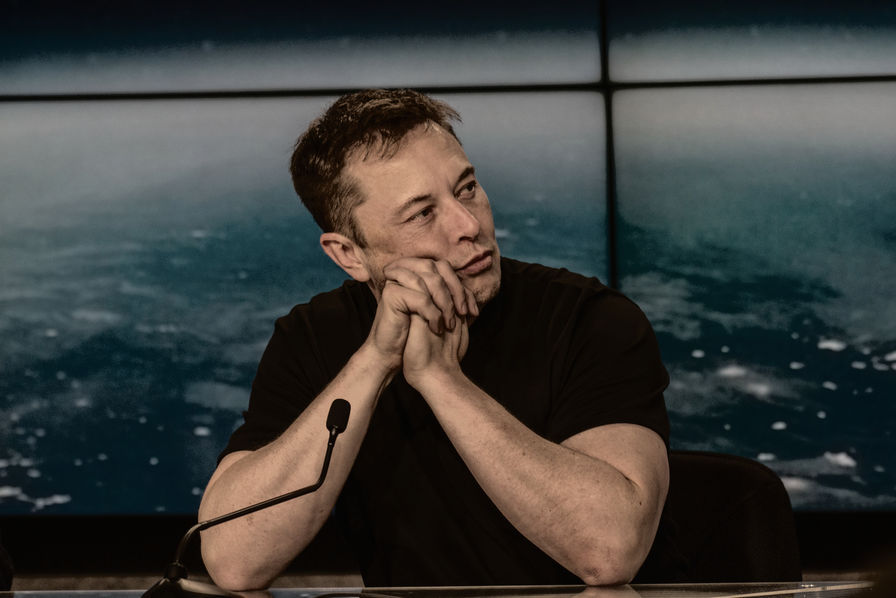
Crédit photo : © mahosadha-ong-ms5GyTZmi3E/Unsplash

Comments